Euro Escort January 28, 2026
Paris 5 Arrondissement: The Real Story Behind the Myths of Escorts and Elegance
People talk about the 5th arrondissement like it’s a scene from a movie - cobblestone streets, old bookshops, cafés where Sartre once smoked, and whispers of escorts wandering near the Luxembourg Gardens. But the truth? It’s not about glamour or secret rendezvous. It’s about students, scholars, and the quiet rhythm of a neighborhood that’s been changing for decades.
Who Actually Lives in the 5th Arrondissement?
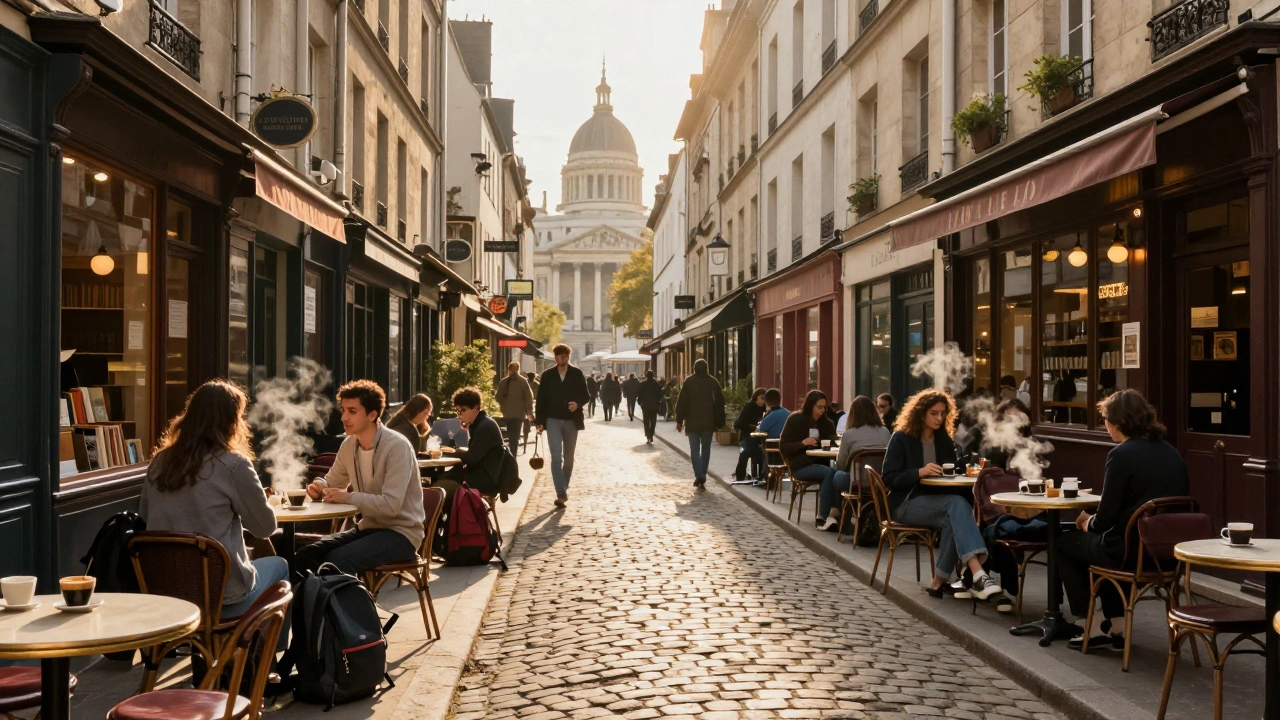
The 5th, or Latin Quarter, isn’t a red-light district. It’s home to the Sorbonne, the Collège de France, and dozens of student hostels. Over 120,000 people live here, and nearly 40% are under 25. You’ll find more backpacks than stilettos on Rue Mouffetard. The cafés serve espresso and baguettes, not cocktails and contracts. The idea that this is a hub for high-end escorts comes from old travel blogs, exaggerated YouTube videos, and tourists who mistake a woman walking alone at night for something she’s not.
In 2023, Paris police published their annual report on street-based solicitation. The 5th arrondissement recorded fewer than 12 reported incidents per month - less than half the rate of the 18th or 19th. Most of these were not organized operations. They were isolated cases, often linked to economic hardship, not tourism-driven sex work. The city has cracked down hard since 2021. Cameras, patrols, and social outreach programs have pushed most activity out of the historic core.
Where Did the Myth Come From?
The myth started in the 1990s. Back then, a few escort agencies operated out of small apartments near Place Monge, advertising "French companionship" to foreign students. It was never widespread, but it caught the attention of American and British tabloids. One article in Condé Nast Traveler in 1998 called the 5th "Paris’s best-kept secret for discreet encounters." That phrase got copied, reposted, and turned into a Google search trap.
Today, if you search "escort Paris 5 arrondissement," you’ll get a flood of websites that look professional but are run by clickbait farms. They use stock photos of the Panthéon and quote fake testimonials. No legitimate agency operates openly here. French law bans advertising sexual services since 2016. Any site promising "book now" or "verified profiles" is either a scam or a trap for your credit card.
What You’ll Actually Find in the 5th
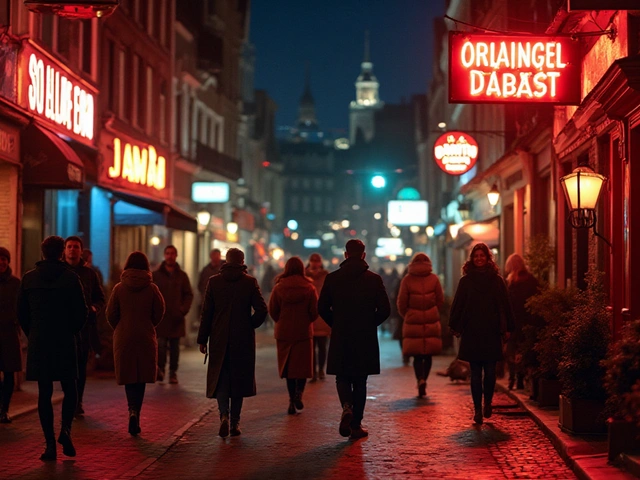
Walk down Rue de la Huchette after sunset. You’ll see students debating philosophy over wine. You’ll hear French being spoken, not English. You’ll pass a tiny bookstore that’s been open since 1952. You’ll smell fresh bread from Du Pain et des Idées. You might see a couple holding hands. You won’t see anyone waving a business card.
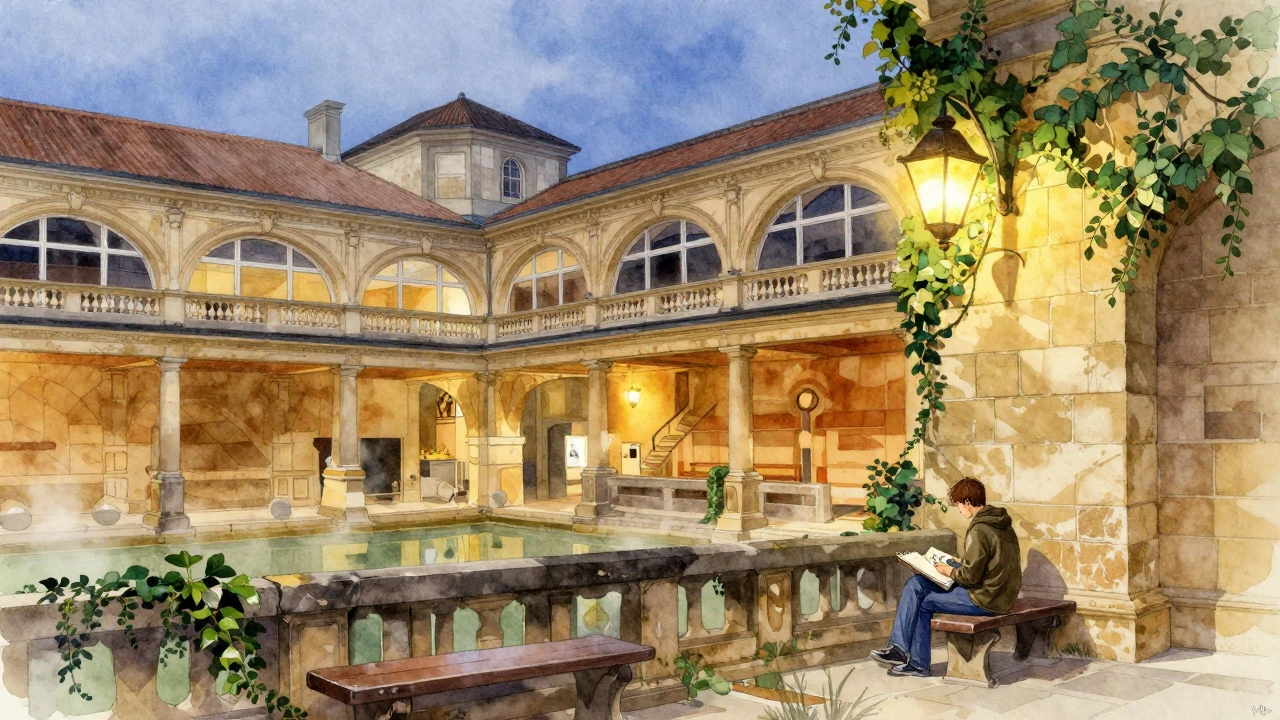
The real charm of the 5th is its authenticity. The Musée de Cluny holds Roman baths older than the United States. The Jardin des Plantes has a 300-year-old arboretum. The boulangerie on Rue de la Bûcherie makes the best pain au chocolat in the city - no reservation needed, no hidden fee. These are the things that draw people here. Not fantasy. Not transactions.
Why the Escort Narrative Persists
There’s a reason this myth sticks: it’s easier to sell a fantasy than a fact. Tourist markets thrive on mystery. Companies that sell "Paris experiences" need hooks. "Find your Parisian lover in the Latin Quarter" sounds sexier than "study medieval manuscripts at the Bibliothèque Sainte-Geneviève."
But the reality? Most people who come here for the first time leave with notebooks full of quotes from Camus, not phone numbers. They take photos of the Notre-Dame spires from the terrace of La Closerie des Lilas. They buy a single rose from a street vendor near Place Saint-Michel and wonder why no one tries to sell them anything else.
The escort narrative is a relic of a time when Paris was exoticized by outsiders. It ignores the real culture: the quiet resilience of a neighborhood that survived revolutions, wars, and gentrification. The 5th doesn’t need to be dangerous or erotic to be beautiful. It just needs to be left alone.
What to Do Instead
If you’re visiting the 5th arrondissement, here’s what actually matters:
- Visit the Musée de Cluny - it’s free on the first Sunday of every month.
- Drink coffee at Les Deux Magots - yes, it’s touristy, but the view of the Panthéon is worth it.
- Walk the Quai de la Montagne Sainte-Geneviève at dusk - it’s the best spot to watch the sunset over the Seine.
- Buy a used book at Shakespeare and Company - the original one, not the copycat.
- Try the crème brûlée at Le Procope - it’s been made the same way since 1686.
These are the moments that stay with you. Not the ones you read about online.

How to Stay Safe
If you’re tempted by any website offering "escorts in the 5th," don’t. These are almost always scams. They ask for upfront payments, then disappear. Some are phishing sites. Others lead to blackmail schemes. French authorities have shut down over 200 such sites since 2022.
Real human connections don’t require a booking form. They happen in line at the bakery. In a conversation with a librarian. On a bench watching students argue about Foucault. You don’t need to pay for a Paris experience. You just need to show up.
The Bigger Picture
The 5th arrondissement is not a backdrop for fantasy. It’s a living, breathing part of Paris that’s been shaped by thinkers, artists, and ordinary people who chose to live here because it felt real. The myth of the escort is a distortion - one that reduces a rich, complex neighborhood to a single, hollow stereotype.
When you walk through its streets, you’re walking through history. Not a screenplay. Not a classified ad. A place where ideas still matter. Where silence is valued more than noise. Where elegance isn’t about who you meet - it’s about how you listen.
Are escorts legal in the 5th arrondissement of Paris?
Selling or buying sexual services is not legal in France. Since 2016, advertising sexual services is a crime, and clients can be fined up to €1,500. While sex work itself isn’t criminalized, any organized activity - including escort agencies, websites, or solicitation - is strictly prohibited. The 5th arrondissement has seen a sharp decline in street-based activity since 2021 due to increased police patrols and social support programs.
Is it safe to walk around the 5th arrondissement at night?
Yes, the 5th arrondissement is one of the safest areas in Paris after dark. It’s well-lit, heavily patrolled, and filled with students, residents, and late-night cafés. Crime rates are low. The most common issue is pickpockets near tourist hotspots like Place Saint-Michel, but violent crime is extremely rare. Stick to main streets like Rue Mouffetard and Rue de la Huchette, and you’ll be fine.
Do escort agencies operate openly in the Latin Quarter?
No. There are no legitimate escort agencies operating in the 5th arrondissement. Any website claiming to offer "verified escorts" in this area is either a scam or a phishing site. French law prohibits advertising sexual services, and agencies are shut down quickly. If you see a site with photos of the Panthéon and promises of "discreet meetings," avoid it. These are designed to steal money or personal data.
Why do so many travel blogs mention escorts in the 5th?
Many of these blogs are written by affiliate marketers who earn money from clicks and bookings. They recycle old stories from the 1990s and use misleading images to attract traffic. The reality is that the 5th is not a hub for escort services. These articles exist because they rank well on Google, not because they reflect truth. Always check the date and source - most are outdated or fabricated.
What should I do if someone approaches me offering escort services?
Politely say no and walk away. Do not engage, take photos, or share personal information. If you feel threatened or harassed, contact local police by dialing 17. In tourist areas, you can also approach a member of the City of Paris tourist information team - they’re stationed near the Luxembourg Gardens and Notre-Dame. These situations are rare, but if they happen, the safest response is to remove yourself from the situation.
Final Thought
The 5th arrondissement doesn’t need to be sexy to be unforgettable. Its power lies in its quiet depth - in the way the light hits the stone of the Sorbonne at noon, in the sound of pages turning in a forgotten library, in the smell of rain on old bricks. You won’t find a fantasy here. But you might find something better: a place that remembers who it is, and doesn’t need to sell you a version of itself to be real.